After a sewage backup, keep people and pets out of the affected area, stop the source where safe, and arrange professional assessment. Air scrubbing may form part of a controlled cleanup plan, but it does not replace removal of contaminated water or affected porous materials.
When HEPA air scrubbing is relevant: HEPA air scrubbing can help control airborne particles during contained sewage-backup cleanup. It supports, but does not replace, source removal, cleaning, controlled drying and safe waste handling. For dust-control use during a clean renovation, see our HEPA air-scrubbing guide for renovations.
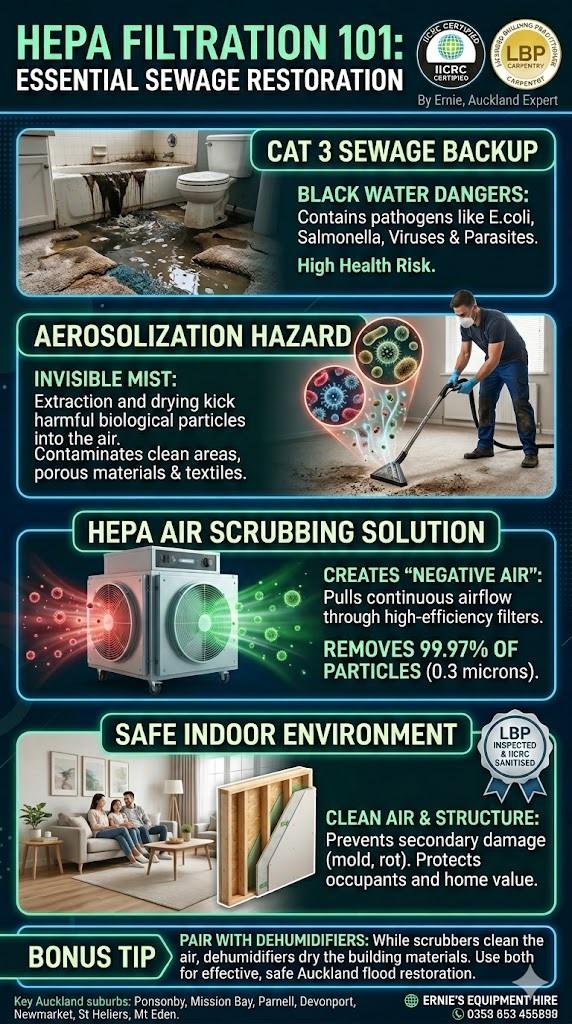
Do you need an air scrubber after a sewage backup?
An air scrubber can support containment and air management during professional cleanup where the scope calls for it. The first priorities are controlling the source, keeping the affected area separate from clean spaces, removing contaminated water and materials where required, then cleaning and drying. The correct controls depend on the water source, materials affected, room layout and the assessment.
Sewage cleanup response chart
| Stage | Purpose | What not to do |
|---|---|---|
| Restrict access | Protect people, pets and clean areas from contamination. | Walk contaminated water through the house. |
| Control the source | Prevent additional wastewater entering the property. | Start drying while the backup is active. |
| Assess and remove | Identify affected contents and porous materials that need controlled handling. | Assume a surface wipe makes every material safe. |
| Clean and dry | Address remaining contamination and moisture in the approved scope. | Use fans to spread contaminants into clean rooms. |
| Verify | Record moisture progress and reinstatement requirements. | Close up or replace linings before conditions are checked. |
What HEPA air scrubbing does — and does not do
Professional air scrubbers use filtration to manage particles in air as part of a wider restoration setup. They may be used with containment and managed airflow to reduce transfer from the work area. They do not make sewage-contaminated carpet, underlay, insulation or building linings safe by themselves, and they do not replace cleaning, removal or moisture control.
First actions after a sewage overflow
- Keep people and pets away. Treat sewage and drain overflow as contaminated water.
- Do not use affected electrical equipment. Arrange qualified assessment where water has reached wiring, outlets or appliances.
- Photograph the event from a safe location. Record the source, water path and affected areas for the insurer, plumber or property manager.
- Contact the relevant professionals. A plumber may be needed to stop the source; restoration work can then address cleanup, drying and documentation.
Why fans and ordinary cleaning are not a complete response
Uncontrolled airflow can move odours and particles from an affected room to cleaner areas. Cleaning must match the source and materials involved. Porous materials that contacted wastewater may require removal, while structural materials require assessment before drying and reinstatement decisions are made.
Frequently asked questions
Will an air scrubber remove sewage contamination?
No. Air scrubbing is only one control within a wider cleanup plan. It does not remove contaminated water or replace cleaning and material removal where those are required.
Can I dry sewage-affected carpet with a dehumidifier?
Do not assume drying alone is sufficient. A restoration assessment should determine whether carpet, underlay and other porous materials can remain or need removal.
Should I open windows after a sewage backup?
Ventilation decisions should suit the cleanup and containment plan. Avoid creating uncontrolled airflow from an affected room into clean areas.
How long does sewage cleanup take?
Timing depends on the source, extent, materials affected, access and drying conditions. A site assessment is needed before a reliable programme can be set.
Need sewage-backup or contaminated-water cleanup in Auckland? Carpet Drying Force can assess the affected area, document the scope and coordinate controlled cleanup and drying.