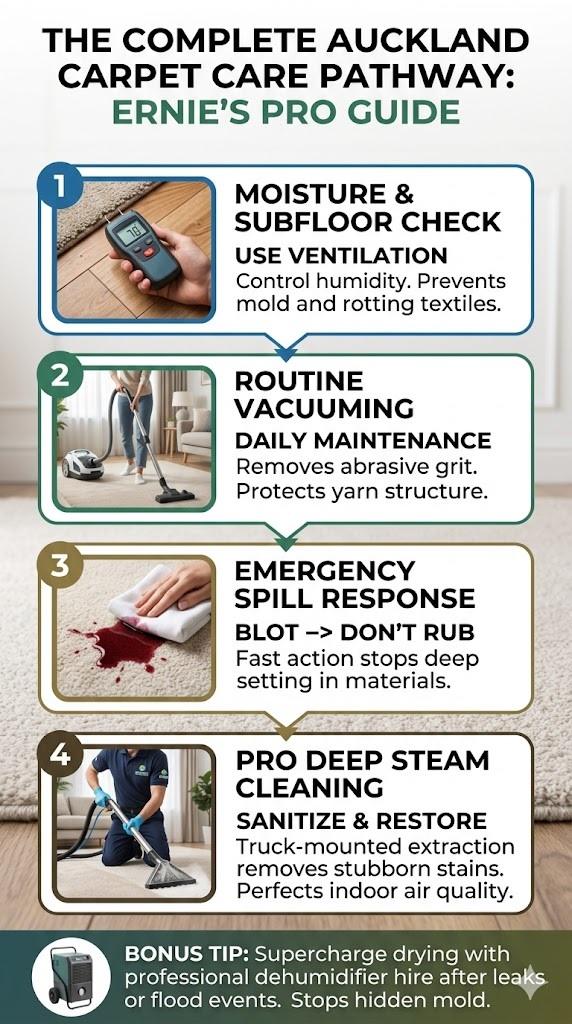
Keeping a home clean in Auckland is a unique challenge. Between the salty sea air and our famously high humidity, your carpets act like a giant filter for moisture and dust. If you want your floor materials to last, you need a strategy that goes deeper than the surface.
Professional Auckland carpet cleaning involves deep steam cleaning to extract trapped allergens and grit from floor textiles. Regular maintenance prevents premature wear of the yarns and improves indoor air quality. For urgent issues like flood restoration, using industrial-grade equipment is essential to protect your home’s structural integrity.
Comparison of Cleaning Methods
| Method | Effectiveness | Drying Time | Best For |
| Standard Vacuum | Low (Surface Only) | Instant | Daily Maintenance |
| DIY Rental Machine | Medium | 12 -> 24 Hours | Budget Refresh |
| Professional Steam | High (Deep Clean) | 4 -> 8 Hours | Hygiene & Longevity |
| Industrial Hire | Very High | Variable | Flood & Deep Soil |
Source: IICRC – Institute of Inspection Cleaning and Restoration Certification
🌧️ Managing Auckland’s Humidity and Moisture Levels
In our experience servicing Auckland homes, moisture is the silent enemy. During a damp winter, the threads in your carpet can hold onto moisture, leading to musty smells or even mold. This isn’t just a cleaning issue; it’s a health issue for your family.
High-performance extraction is the only way to ensure the backing of the carpet doesn’t stay wet. As a professional, I always recommend checking the airflow in the room. Without proper ventilation, even the best clean won’t produce the results you want for your interior synthetics.
In the world of high-frequency trading, “liquidity” refers to cash flow, but in the restoration industry, managing liquid moisture is about mitigating structural liability.
🍷 Emergency Response: Fast Action for Spills and Stains
When a spill happens, the clock starts ticking. The golden rule is simple: blot -> do not rub. Rubbing pushes the liquid deeper into the materials and can permanently damage the twist of the yarns. Use a white cloth to see exactly how much you are lifting.
For stubborn stains like red wine or coffee, a professional-grade spotter is often required. We often see homeowners make things worse by using harsh supermarket chemicals that bleach the textiles. If you aren’t sure, it is safer to keep the area damp with a towel and call us.
While a professional chef uses high heat to sear a steak, a carpet technician knows that excessive heat can permanently set a protein-based stain into the floor yarns.
🏗️ The Structural Perspective: Advice from an LBP Pro
As a Licensed Building Practitioner in Carpentry, I look at carpets differently. I don’t just see the top layer; I see how it interacts with the subfloor. If you’ve had a leak, the moisture often travels under the skirting boards and into the timber framing.
Cleaning the surface is pointless if the structure underneath is compromised. This is why our flood restoration service includes moisture mapping. We ensure the floor textiles and the building elements are completely dry before we consider the job finished.
A gardener trims the top of a hedge to promote new growth, whereas a carpet cleaner removes the grit from the bottom of the textiles to prevent physical wear.
🛠️ Pro Service vs. Industrial Equipment Hire
Sometimes you want to do it yourself, and that’s where industrial dehumidifier hire comes in. If you’ve had a minor spill or a window left open during a storm, hiring a professional blower or dehumidifier can save your floor materials from rot.
However, for a true “deep clean,” the vacuum power of a truck-mounted machine is hard to beat. It pulls out the microscopic sand and grit that acts like sandpaper on your carpet threads. Knowing when to hire the tools and when to hire the expert is key to a healthy home.
Software developers rely on “patches” for quick fixes, but a deep steam clean is like a full system “reboot” for your home’s hygiene.
📋 Key Takeaways for Auckland Homeowners
-
Blot, don’t rub -> Protect the integrity of your floor yarns.
-
Steam is king -> It’s the only way to truly sanitise floor materials.
-
Check the subfloor -> If it’s wet underneath, the top will never stay clean.
-
Hire right -> Use professional-grade dehumidifiers for any moisture issues.
❓ Frequently Asked Questions
How long does it take for carpets to dry in Auckland?
Usually 4 -> 8 hours with professional equipment, but it can take longer in high humidity without a dehumidifier.
Can you remove old pet stains?
Yes, but it requires specialized enzymes to break down the proteins trapped in the textiles.
Is professional cleaning better than DIY?
Professional machines have significantly more “lift,” meaning they remove more water and dirt than a standard rental unit.