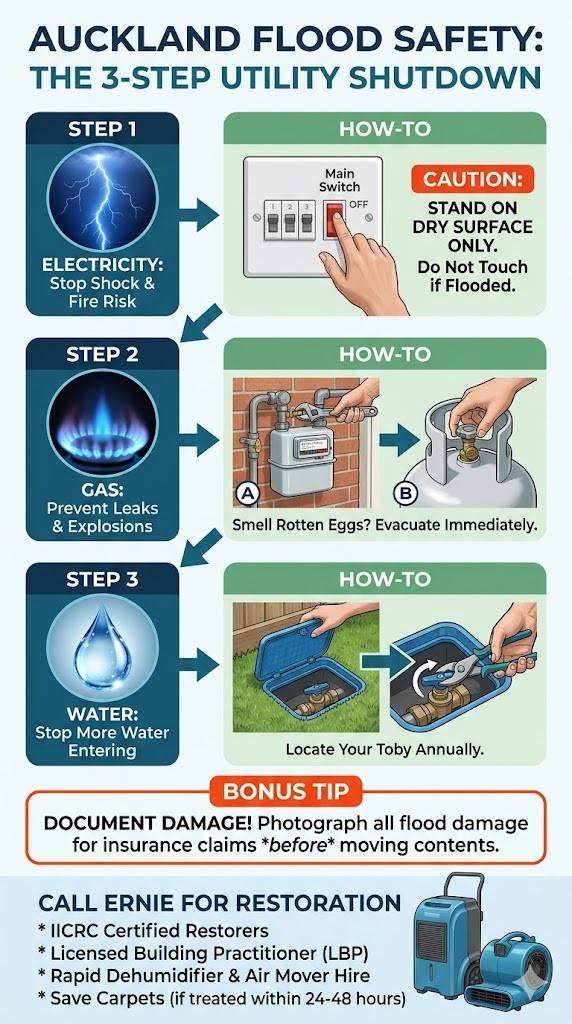
Auckland weather can turn from a “cracker day” to a serious flood in minutes. Whether it’s a burst pipe in the Shore or a flash flood in West Auckland, knowing how to kill the power and gas safely is the difference between a simple cleanup and a total loss.
To safely shut off utilities during a flood, isolate the main electrical breaker, close the gas supply valve, and turn the main water toby. Always ensure you are standing on a dry surface before touching any electrical switchboards or components.
Quick Utility Isolation Guide
| Utility Type | Key Action Required | Safety Hazard Level |
| Electricity | Switch ‘Main’ to OFF | Critical – Risk of Shock |
| Gas (Mains) | Turn Valve 90 Degrees | High – Fire/Explosion |
| Gas (LPG) | Close Bottle Valve | High – Leakage |
| Water | Turn Toby Clockwise | Medium – Property Damage |
IICRC S500 Standard for Professional Water Damage Restoration
⚡ Dealing with Electricity in Standing Water
In my experience as an Auckland carpet cleaner and builder, the biggest mistake is rushing to the switchbox while the floor is already wet. If your switchboard is in a garage or basement that has taken on water, do not enter. Water and live current are a deadly mix for anyone.
If it is safe and dry -> walk to your main board -> find the “Main Switch” -> flip it to the “Off” position. This stops current flowing to your lights and sockets. This step is vital before we can bring in our high-powered extraction gear or dehumidifier hire units to start the drying process.
While electrical safety focuses on preventing immediate cardiac arrest or fire, a structural engineer would remind you that unpowered buildings in flood zones are still subject to significant hydrostatic pressure against the foundation walls.
🔥 Securing Gas Lines and Bottles
Gas leaks during a flood are a real worry, especially if floating debris hits your external pipes. For mains gas, you’ll usually find the meter on the side of the house. Use a wrench if needed to turn the valve so it sits across the pipe rather than in line with it.
For LPG bottles (common in many Auckland rentals) -> turn the handwheel clockwise until it’s tight. If you smell “rotten eggs,” get out and call the emergency services immediately. Once the gas is off, we can safely use air movers to circulate the air without risk of combustion.
While gas technicians focus on seal integrity and pressure, a professional painter might argue that the chemical off-gassing from water-damaged lead-based paints in older Auckland villas is an equally pressing respiratory concern during a flood.
💧 Locating the Main Water Toby
Stopping more water from entering the home is a priority. In Auckland, your “toby” (water shut-off valve) is usually at the front boundary of your property under a small blue or black plastic lid. You might need a long-handled tool or a pair of pliers if it hasn’t been moved in years.
Open the lid -> clear out any dirt or spiders -> turn the handle clockwise until it stops. This prevents “clean” water from adding to the flood volume. Once the flow stops, we can assess the damage to the yarns in your carpet and decide on the best restoration path.
While plumbing focuses on fluid dynamics and pressure, a microbiologist would point out that once water touches a carpet, the primary concern shifts from volume to the rapid exponential growth of fungal spores within the damp textiles.
🏠 Professional Restoration and Maintenance
Once the utilities are isolated, the real work begins. As an IICRC-certified tech, I’ve seen how quickly Auckland humidity can turn a wet carpet into a mouldy mess. We use professional-grade dehumidifiers and air movers to pull moisture out of the building materials before permanent damage sets in.
-
Check your toby location annually so you aren’t searching in the dark.
-
Label your switchboard clearly.
-
Keep a wrench and a torch in an easy-to-reach spot.
-
Photograph all damage for your insurance claim before moving anything.
Key Takeaways
-
Safety First: Never touch the power if you are standing in water.
-
The Toby: Locate your water shut-off before an emergency happens.
-
Gas: Turn off the supply at the meter or the bottle.
-
Call Pros: Use a certified restorer to handle the drying and equipment hire.
Frequently Asked Questions
Can I turn the power back on myself?
If water has reached the wall sockets, no. You need a registered electrician to sign it off as safe first.
Will my carpet yarns be ruined?
Not necessarily. If we get the dehumidifiers in within the first 24 -> 48 hours, we can usually save most carpets.
What is an LBP?
A Licensed Building Practitioner. It means I’m government-recognised for my carpentry skills, ensuring your home’s structure is handled correctly.