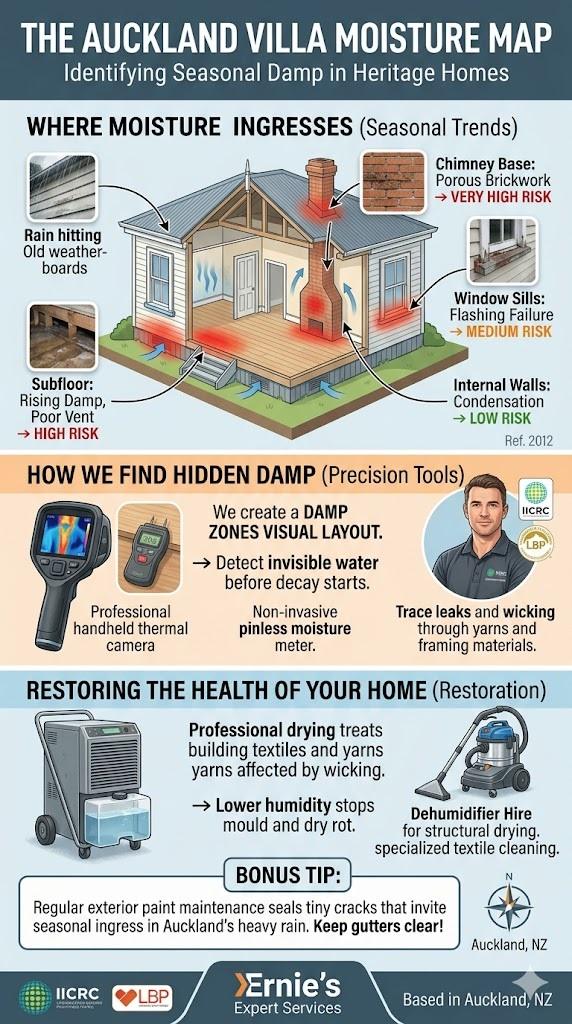
Quick answer: Hidden damp in an Auckland villa is assessed by identifying the water source, inspecting the likely travel path and taking comparative moisture readings in affected and unaffected materials. A moisture meter or thermal camera can support an inspection, but the findings need to be interpreted alongside the building details and visible signs.
How hidden damp is assessed in Auckland villas
Older villas can develop dampness through roof or wall leaks, plumbing failures, poor drainage, subfloor moisture or indoor condensation. The right response is to find and address the water source first, then assess which materials are affected before deciding whether drying, selective removal or building repairs are required.
Hidden-damp assessment chart
| Sign or location | What an assessment checks | Useful next step |
|---|---|---|
| Ceiling stain or soft lining | Potential roof, plumbing or upper-level water path; extent into ceiling cavity. | Stop the source and inspect the cavity before reinstatement. |
| Musty carpet edge or skirting | Whether moisture is entering from a wall, subfloor or adjacent wet area. | Assess flooring layers and the source; dry materials that can be retained. |
| Damp wall near window or exterior corner | Flashings, cladding details, drainage and comparative readings. | Arrange building repair advice and dry affected materials after the source is controlled. |
| Persistent subfloor odour | Drainage, ventilation, plumbing leaks and moisture beneath the floor. | Investigate accessibly and address the cause before treating interior finishes. |
What moisture mapping involves
A systematic assessment records affected rooms, visible damage and readings from comparable materials. Non-invasive meters can help identify areas needing closer inspection. Pin meters may be used where appropriate for a material. Thermal imaging can show temperature patterns, but it does not by itself confirm moisture; observations are checked against the building context and other measurements.
Why the source matters
Drying without resolving the source risks repeat damage. For suspected roof or exterior-wall leaks, a suitably qualified building professional may need to investigate the weather-tightness issue. For a burst pipe or appliance leak, the plumbing fault should be controlled before restoration drying begins.
When dampness reaches carpet or flooring
Carpet, underlay and flooring can be affected by moisture from an adjacent leak or subfloor. The appropriate scope depends on the water category, materials, how long they were wet and whether drying can be verified. See our guides to drying hidden wall and ceiling cavities and what affects carpet drying time.
What to do when you find a damp area
- Stop the water source if it is safe to do so.
- Photograph the area and note when the issue was first noticed.
- Keep clear of electrical hazards and avoid disturbing visibly damaged linings.
- Arrange an assessment if the moisture may be concealed or the source is uncertain.
- Keep records of inspections, drying and repairs for the owner, insurer or property manager where relevant.
Frequently asked questions
Can a moisture meter find every hidden leak?
No. A meter is one part of an assessment. Readings need to be compared with unaffected materials and considered with the building construction, visible evidence and likely water path.
Does a thermal camera prove that a wall is wet?
No. Thermal imaging identifies temperature differences. It can help target further investigation, but does not on its own confirm moisture or identify its source.
Should I dry a damp wall before fixing the leak?
The source should be controlled first wherever possible. Drying can then be planned for the affected materials and verified before finishes are reinstated.
When should carpet or underlay be assessed?
Assess carpet and underlay when water has entered the room, when dampness is present at edges or skirtings, or when there is a persistent musty odour. The water source and the materials involved guide the next step.