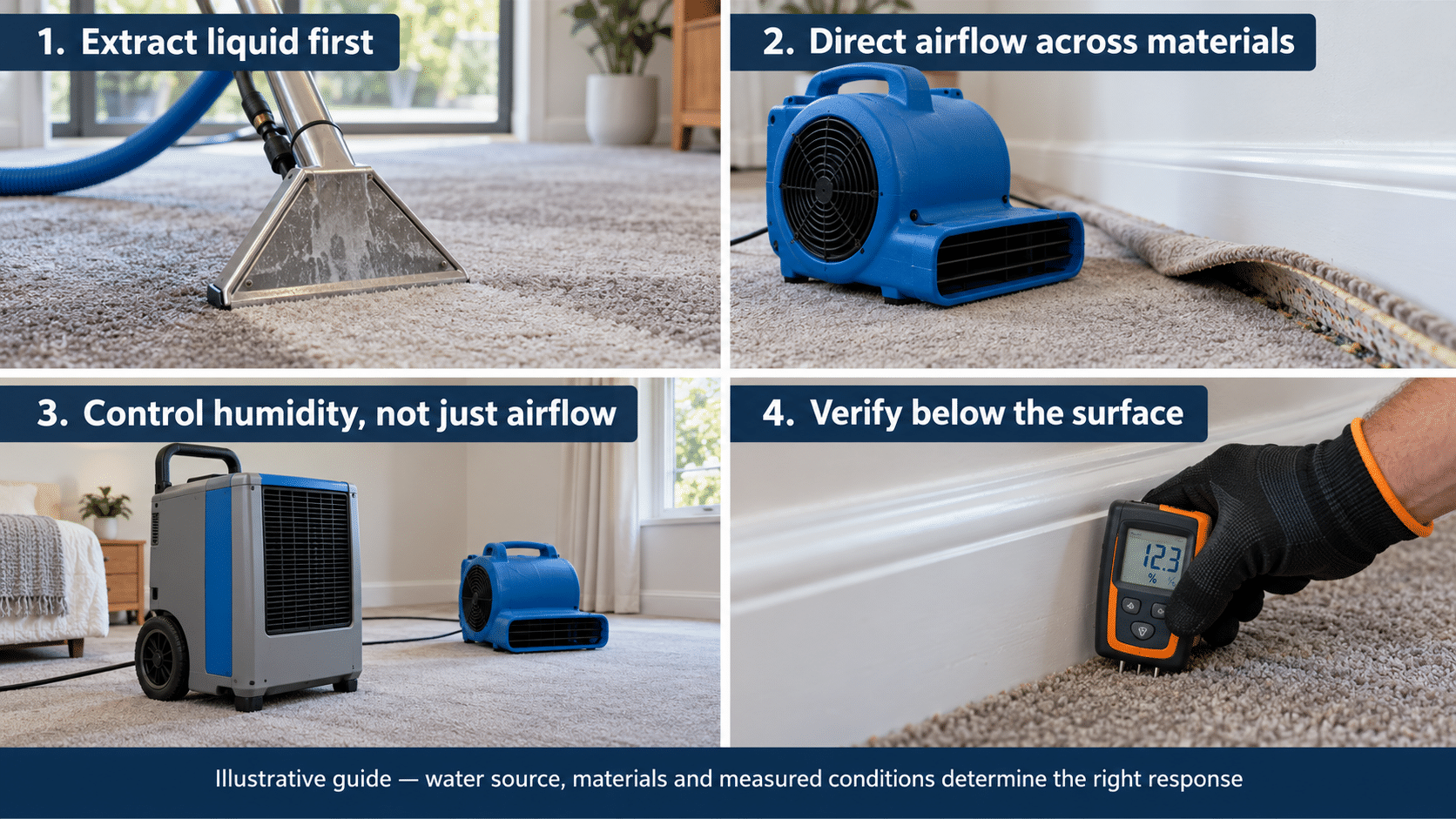
Quick answer: commercial carpet dryers, also called air movers, direct high-velocity airflow across wet carpet and floor edges to support evaporation. They work best after water extraction and alongside dehumidification where humidity would otherwise slow drying. The correct number and placement depend on the wet area, water source, carpet and underlay condition, airflow paths, and moisture readings below the surface.
Documented Auckland example: extraction, air movement and monitoring work together
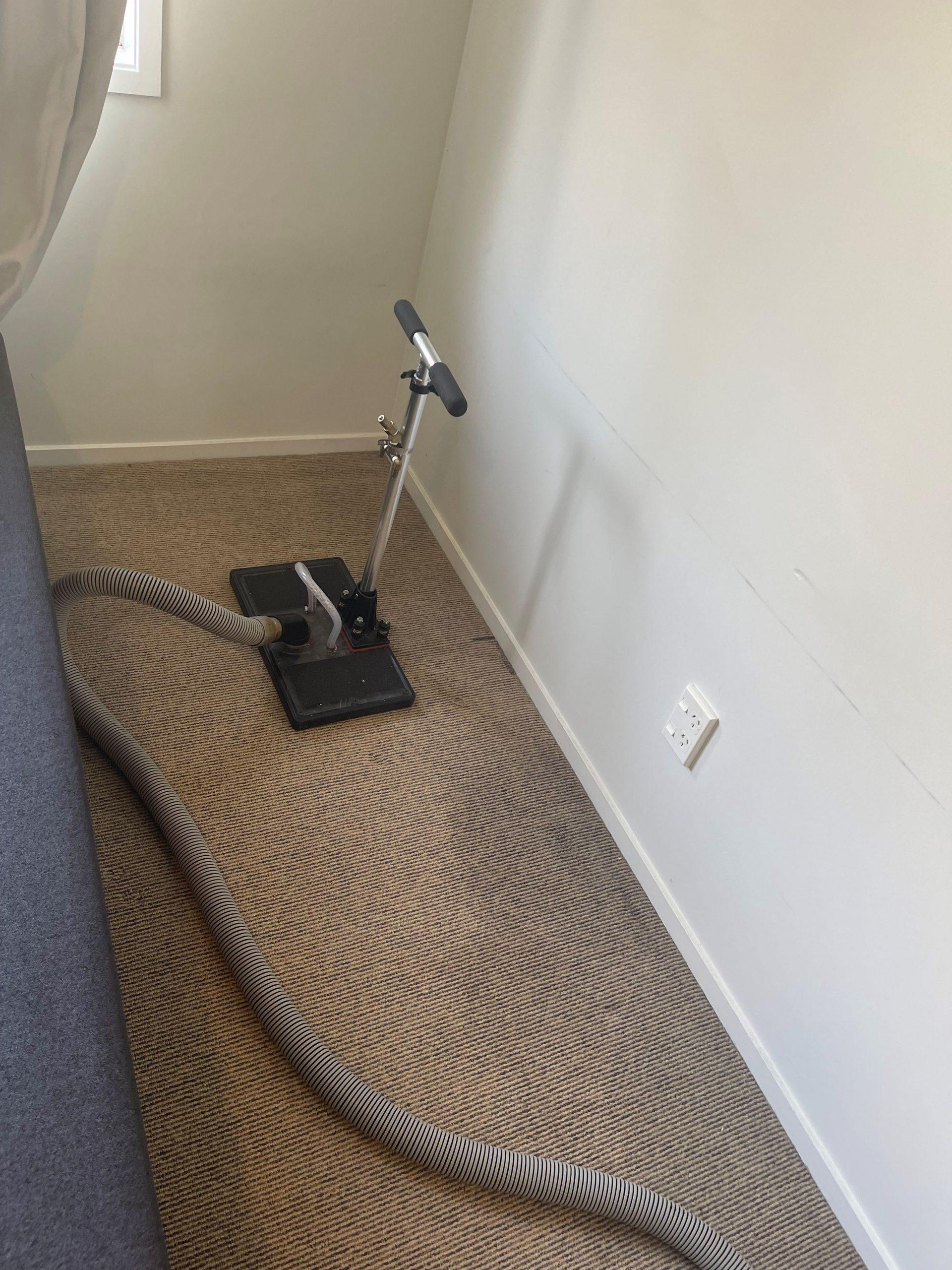
| Recorded water path | Recorded equipment response | Why equipment was not treated as a fixed recipe |
|---|---|---|
| Water was initially identified in the garage and travelled into the hallway, bedroom and wardrobe. | Water Claw extraction and air movers were used; the controlled drying programme was adjusted when slower-drying areas were identified. | Equipment placement and duration followed the affected materials and monitoring results, rather than a standard number of machines or days. |
Read the complete washing-machine-leak case record.
This is one documented restoration, not evidence that hire equipment alone is suitable for every leak or a promise of drying time, equipment quantity, cost or outcome. Water source, contamination, saturation, materials, power availability and measured conditions determine the appropriate response.
When does wet carpet need commercial drying equipment?
Commercial drying equipment can help after a clean-water leak, appliance overflow, plumbing failure, cleaning mishap or contained water entry. The carpet surface does not tell the whole story: backing, underlay, subfloor, skirtings and nearby wall linings may retain moisture after the pile feels dry. Contaminated water, sewage, extensive saturation or material deterioration may require a different response, including removal and cleaning rather than drying alone.
Carpet drying equipment chart
| Equipment | Main role | Best used with |
|---|---|---|
| Air mover / carpet dryer | Moves air across wet carpet, flooring edges or other surfaces to support evaporation. | Water extraction, sensible equipment placement and monitoring. |
| Dehumidifier | Removes moisture from the air so evaporation can continue more effectively. | Air movement in a managed drying area. |
| Water extraction equipment | Removes liquid water before relying on evaporation. | Assessment of underlay, subfloor and connected materials. |
| Moisture meter or monitoring record | Helps assess whether building materials are progressing toward a suitable dry condition. | A documented drying plan and comparison readings. |
Air mover types: why placement matters more than labels
Centrifugal air movers are commonly used for focused airflow along carpet, walls and floor edges. Axial fans can move a larger volume of air across an open area. Neither type is automatically the right answer for every loss. Good placement creates a clear airflow path across the wet material without creating trip hazards, blowing contamination into clean areas or leaving the underlay and floor assembly unassessed.
A practical wet-carpet drying plan
- Make the area safe. Keep equipment away from standing water and electrical hazards; stop the water source if safe.
- Assess the water and materials. Confirm whether the water was clean or contaminated, and check carpet, underlay, subfloor and wall edges.
- Remove liquid water first. Extraction reduces the moisture load before air movement and dehumidification begin.
- Place equipment for the actual layout. Direct airflow across wet carpet and establish a humidity-control plan where needed.
- Monitor and verify. Reassess materials and conditions before moving furniture back or closing repairs.
Commercial premises: reduce disruption without guessing
For offices, retail spaces, rentals and managed properties, record affected rooms, access restrictions, equipment placement, electrical safety checks and moisture monitoring. A staged plan can help decide which areas can safely remain in use and which need isolation. Reopening should be based on safety and material condition, not only appearance or a fixed drying timeframe.
Frequently asked questions
Can I dry wet carpet with ordinary household fans?
Small fans may move air but are not a substitute for water extraction, humidity control and material assessment. Where carpet and underlay are saturated or water has reached building materials, commercial equipment and monitoring can provide a more controlled drying approach.
Do I need a dehumidifier with carpet dryers?
Often, yes. Air movers encourage evaporation, while a dehumidifier helps remove moisture from the air. The need and capacity depend on room conditions, the wet area and the drying plan.
How many carpet dryers do I need?
There is no universal number. Equipment needs depend on the area, moisture load, layout, affected materials, available power and whether dehumidification is being used. A site assessment is the safest way to size a drying setup.
Can wet underlay be dried?
It depends on water category, saturation, material condition and whether it can be cleaned and dried to a suitable condition. Underlay may need removal in some losses so the subfloor and connected materials can be assessed and dried.
For standard equipment bookings, see our carpet dryer hire in Auckland. For an assessment after a leak or flood, see our flood restoration service.