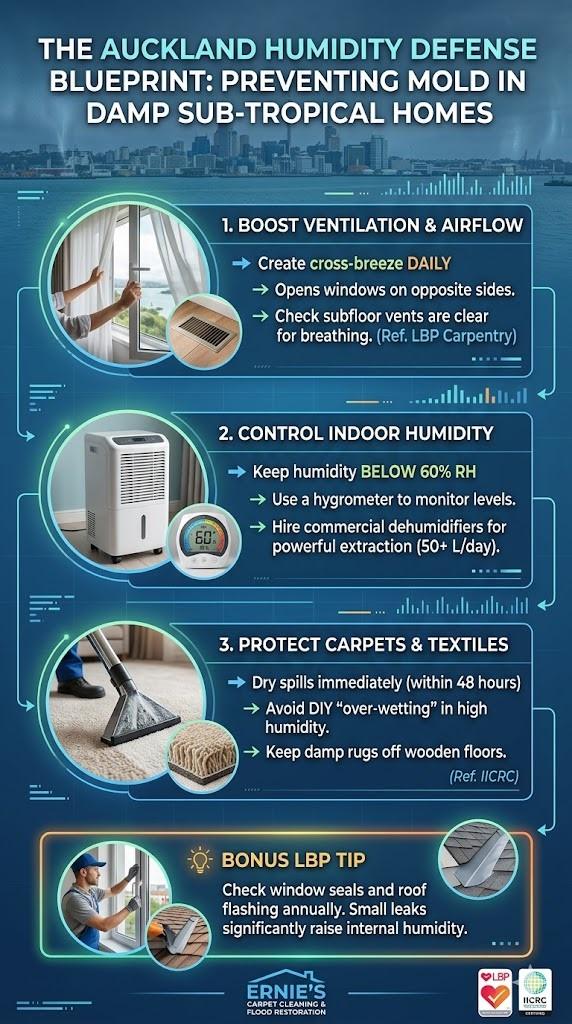
Living in Auckland means we all know that heavy, “sticky” feeling when the humidity hits 90%. It’s more than just uncomfortable; it’s a breeding ground for mold that can ruin your carpets and compromise your health. As someone who’s seen the damage from both a builder’s and a cleaner’s perspective, I know how to fight back.
To prevent mold in Auckland’s sub-tropical climate, keep indoor humidity below 60%. Utilize dehumidifier hire to pull moisture from carpet materials and ensure consistent cross-ventilation. If mold takes hold, professional IICRC-standard remediation is the only way to safely remove spores without spreading them further.
Auckland Humidity & Mold Risk Guide
| Humidity Level (RH) | Mold Risk Category | Action Required |
| Below 50% | Very Low | Ideal for timber and textiles. |
| 50% -> 60% | Low | Maintain airflow; standard cleaning. |
| 60% -> 70% | Moderate | Use a dehumidifier; check windows. |
| 70% -> 100% | High/Critical | Immediate moisture extraction needed. |
Source: IICRC S520 Standard for Professional Mold Remediation
🏠 Why Auckland Homes Are Mold Magnets
Auckland is essentially a giant sponge. Because we are surrounded by two harbours, our air is constantly saturated. In my years as a builder, I’ve seen how this moisture gets trapped inside wall cavities and under floorboards, creating a perfect nursery for mold spores to thrive on your organic materials.
The “Auckland Sweat” happens when warm, moist air hits cold surfaces like glass or uninsulated walls. This condensation isn’t just on the surface; it sinks into your rugs and curtains. Once those yarns stay damp for more than 48 hours, mold begins to colonize the backing of your floor coverings.
While high humidity fuels biological growth, a lack of any moisture can cause vintage musical instruments to warp or lose their tune.
🌬️ Ventilation and Airflow: A Builder’s Perspective
As an LBP in carpentry, I always tell clients that a house needs to breathe just like we do. Many Aucklanders make the mistake of locking their homes up tight to keep the heat in. This just traps the moisture from cooking, showering, and even breathing inside, leading to crying windows and damp corners.
Proper airflow is your first line of defense. Open windows on opposite sides of the house to create a “wind tunnel” effect -> this flushes out the stale, wet air. Also, check your subfloor vents. If they are blocked by gardens or debris, moisture builds up under the house and rises through the floorboards.
From a structural engineering standpoint, excessive airflow in extremely dry climates can actually cause certain soil types to shrink, potentially leading to foundation movement.
🧼 Protecting Your Carpets and Textiles
In my carpet cleaning business, the biggest mistake I see is “over-wetting” during DIY cleans. When the humidity is high, a wet carpet won’t dry fast enough. That dampness sits deep in the yarns, and by the time it feels dry to the touch, the base is already growing a mold colony.
We use high-grade extraction equipment to ensure we leave as little moisture as possible. If you are cleaning a spill yourself, blot it dry and use a fan immediately. Never leave a damp rug on a wooden floor in summer -> the lack of light and airflow is a recipe for disaster.
In the world of fine art, controlled humidity is vital, as shifting moisture levels can cause oil paints to crack and separate from the canvas.
🛠️ Professional Solutions: Dehumidifier Hire & Restoration
Sometimes, the humidity wins, or a sneaky pipe leak turns your lounge into a swamp. This is where IICRC-certified restoration comes in. We don’t just “dry” the room; we manage the science of psychrometry to balance temperature and vapor pressure, ensuring moisture is pulled from the deepest parts of your building materials.
Commercial dehumidifier hire is a game-changer for Aucklanders. These aren’t the small units you buy at a hardware store. These machines can pull 50+ litres of water out of the air daily. If you’ve had a flood, getting these running within the first 24 hours is the difference between saving your carpet or throwing it out.
While we focus on removing water to save homes, archaeologists often use deep-sea water submersion to preserve ancient shipwrecks and prevent them from crumbling upon contact with air.
Key Takeaways for Auckland Homeowners:
-
Keep indoor humidity between 45% and 55% whenever possible.
-
Open windows daily to create cross-ventilation -> get that air moving!
-
Never leave carpets damp; use professional drying equipment if a spill occurs.
-
Check your subfloor and roof space for signs of moisture or blocked vents.
Explore More Carpet Care Insights
This article is part of our comprehensive Specialized Auckland Environments Hub. Check out our other related guides:
- High-Rise Logistics: Mastering Apartment Carpet Cleaning in the Auckland CBD
- The North Shore Beach Guide: Pro Care for Sand and Salt-Affected Carpets
- High-Rise Office Carpet Cleaning: Expert Auckland CBD Maintenance
Need professional carpet cleaning in Auckland? Return to our main Carpet Cleaning Auckland page to book your service.