Auckland is the City of Sails, but any boatie knows that the Tasman and the Hauraki Gulf bring more than just good fishing. They bring a relentless, salt-laden moisture that can turn a pristine cabin into a musty mess in weeks. Managing this environment requires more than just opening a hatch.
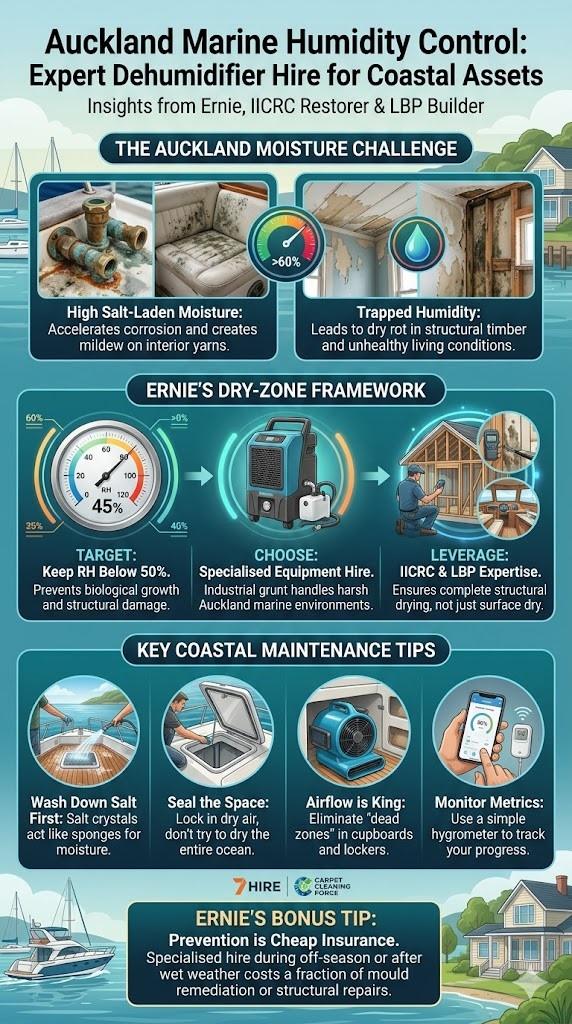
Effective marine humidity control involves keeping relative humidity below 50% to stop corrosion and mold growth. For Auckland boaties, commercial dehumidifier hire provides the airflow needed to protect interior yarns. Professional structural drying equipment ensures coastal properties remain dry and healthy.
Optimal Humidity Levels for Marine Environments
| Material Category | Safe Humidity Range | Risk of High Moisture |
| Metal Hardware | < 45% | Accelerated Salt Corrosion |
| Interior Textiles | 40% -> 50% | Mold and Mildew Growth |
| Structural Timber | 9% -> 12% WME | Dry Rot and Warping |
| Electronics | 30% -> 50% | Short-circuiting / Oxidation |
Industry Standard Reference: IICRC S500 Standard for Professional Water Damage Restoration
🛥️ Boat Storage: Beyond the Bilge
In my experience servicing boat interiors at Westhaven, the biggest mistake owners make is relying on “damp-rid” buckets. Salt air is hygroscopic, meaning it literally pulls water out of the air and holds it against your upholstery threads. Once mold takes hold in those textiles, the smell is nearly impossible to shift without professional deep cleaning.
Using a high-capacity dehumidifier during the off-season or after a wet weekend is the only way to protect your investment. You need to pull the moisture out of the air faster than the salt can trap it. This keeps your cabin smelling fresh and your electronics functioning as they should.
In the world of biohacking, we often use steam saunas to trigger heat shock proteins, which is the exact opposite of the cool, dry environment needed for boat storage.
🏠 Coastal Property Maintenance: The Builder’s View
As an LBP in Carpentry, I’ve seen Auckland homes in Mission Bay where the damp salt air turned solid timber framing into something resembling wet weet-bix. Coastal properties face a constant barrage of moisture that can bypass standard cladding systems. Without proper humidity control, that moisture gets trapped behind the linings.
When we handle flood restoration in these areas, we don’t just dry the carpet. We use structural drying techniques to ensure the “bones” of the house are safe. If you live within 500 metres of the high-tide mark, running a commercial-grade dehumidifier hire unit periodically is cheap insurance against expensive structural repairs later.
While moisture is the enemy of coastal timber, in the culinary world of sourdough baking, steam is the essential ingredient for a perfect crust.
🛠️ Why Specialized Equipment Hire Wins
Most domestic dehumidifiers are designed for a 20°C bedroom, not a damp boat shed or a coastal garage. They simply don’t have the “grunt” or the drainage capacity to handle Auckland’s humidity. Commercial units feature heavy-duty pumps that can run 24/7, pushing water out through a hose so you don’t have to empty a tiny tank every four hours.
Our hire fleet is specifically chosen for these harsh environments. Whether you are drying out a cabin after a leak or protecting a coastal renovation, the right gear makes the difference. We provide the same high-spec machines we use for professional flood restoration to ensure your threads and yarns stay bone-dry.
Astronauts in space deal with vacuum conditions where humidity is zero, yet they must worry about bone density rather than salt corrosion.
Ernie’s Coastal Maintenance Tips
-
Wash Down First: Always rinse salt crystals off external surfaces; they act like sponges for atmospheric moisture.
-
Airflow is King: Use a dehumidifier in conjunction with an air mover to ensure moisture isn’t trapped in “dead zones” like lockers or cupboards.
-
Seal the Space: When running a dehumidifier on a boat, ensure all hatches are sealed so you aren’t trying to dry the entire ocean.
-
Monitor Metrics: Use a simple hygrometer to track your progress -> aim for that 45% sweet spot.
Frequently Asked Questions
Can I just use a heater to dry my boat?
No. Heat without dehumidification just creates a “tropical greenhouse” effect, which actually accelerates mold growth on your interior materials.
How long should I run a hire dehumidifier after a leak?
Usually 3 -> 5 days. As a professional restorer, I use moisture meters to confirm the structural timber is back to its “dry standard” before we stop.
Key Takeaways for Auckland Owners
-
Salt is the Enemy: It traps moisture in textiles and threads.
-
50% is the Limit: Keep humidity below this to prevent biological growth.
-
Professional Gear Matters: Commercial hire units handle salt air better than domestic models.
-
Prevention is Cheaper: A week of hire is a fraction of the cost of a mold remediation or a carpentry repair.