A HEPA air scrubber can support a renovation dust-control plan, but it does not replace containment, source control, safe work practices or cleaning. If asbestos, silica or other hazardous materials may be present, stop work and obtain appropriate professional advice before disturbing them.
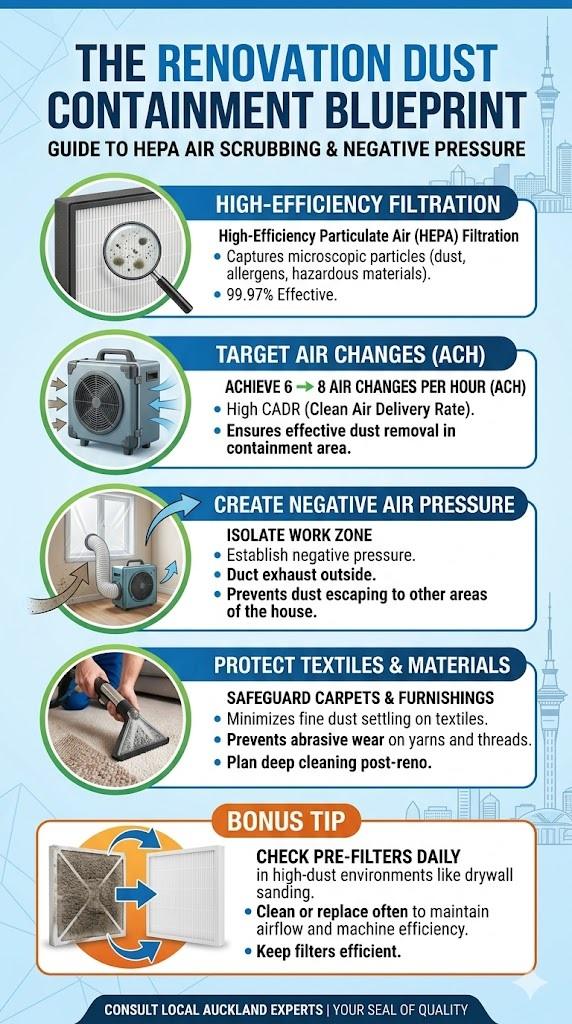
When is a HEPA air scrubber useful during renovation?
Air scrubbing can be useful when sanding, removing linings or carrying out dusty work in an occupied property. It can help manage airborne particles within a planned work zone. The exact equipment, placement and containment approach depend on the room, materials, work method and whether occupants remain in the property.
Renovation dust-control chart
| Control | Purpose | Key limitation |
|---|---|---|
| Containment | Separates the work area from occupied and clean areas. | Must be installed and maintained to suit the work. |
| HEPA air scrubber | Filters air as part of the work-zone controls. | Does not replace source control or cleanup. |
| Dust extraction at the tool | Captures dust close to where it is created. | Depends on suitable equipment and work practice. |
| Post-work cleaning | Removes settled dust from the work area and nearby surfaces. | Should follow the material and contamination risk. |
Check for hazardous materials before work starts
Older homes and building materials can contain asbestos. WorkSafe New Zealand advises homeowners to check for asbestos before work begins and not disturb material that may contain it. If you suspect asbestos, stop work, keep people away and contact a reputable asbestos contractor for advice.
How air scrubbing fits into a clean renovation setup
- Plan the work area. Identify dusty tasks, occupied areas and safe access routes.
- Control the source. Use appropriate work methods and tool extraction where available.
- Contain the zone. Prevent dust migrating into occupied rooms.
- Use suitable filtration. Place air-scrubbing equipment to support the containment plan.
- Clean and check. Remove settled dust using a method appropriate to the materials and risk.
Protecting carpets and contents
Move or protect contents before dusty work begins. Fine dust can settle into carpets, upholstery, cupboards and electronics. A clean-up plan should cover the work zone and adjacent spaces that may have been exposed, rather than relying on filtration alone.
Frequently asked questions
Can a HEPA air scrubber replace dust barriers?
No. Filtration works best alongside containment and source control. It does not stop all dust from leaving an uncontained work area.
Can I use an air scrubber if asbestos may be present?
Stop work and get professional advice first. Do not disturb suspected asbestos or treat ordinary renovation equipment as a substitute for an asbestos control plan.
Should I open windows during dusty renovation work?
Ventilation decisions depend on the containment and work plan. Uncontrolled airflow can move dust into other parts of the property.
When should carpets be cleaned after renovation work?
After the dusty work is complete and the cleaning approach has addressed containment removal and settled dust. The suitable method depends on the materials and the type of dust involved.
Need an air-scrubbing or post-renovation cleaning plan in Auckland? Carpet Drying Force can assess the space and advise on suitable equipment and cleaning steps.