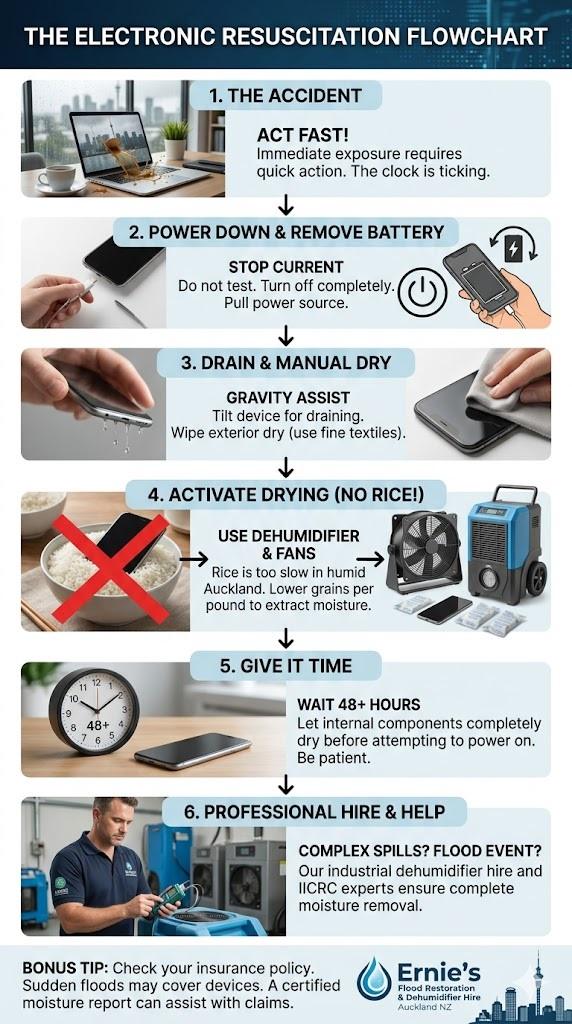
Dropping your smartphone in the sink or having a laptop caught in an Auckland flash flood is a gut-wrenching moment. As a restoration pro, I’ve seen thousands of dollars of gear saved—or destroyed—based on what happens in the first ten minutes.
To save wet electronics, immediately power off the device and remove all power sources. Use a high-quality dehumidifier to extract hidden moisture from internal electronic circuits. Professional flood restoration techniques significantly increase recovery chances compared to risky DIY methods like using rice or hair dryers.
Electronics Recovery Probability Matrix
| Liquid Type | Corrosion Risk | Recovery Chance | Action Required |
| Distilled Water | Low | 90% | Immediate Dry |
| Auckland Tap Water | Medium | 70% | Flush & Dry |
| Coffee / Soda | High | 40% | Professional Clean |
| Salt Water | Extreme | <10% | Expert Rinse/Salvage |
Likelihood of Successful Electronic Device Repair
Source: iFixit
🛠️ The “Golden Hour”: Immediate Rescue Steps
The moment the spill happens, the clock starts ticking. In my years as a Licensed Building Practitioner, I’ve noticed people panic and hit the power button to see if it still works. That’s the quickest way to short-circuit the board.
Follow this sequence:
-
Power Down -> Remove Battery (if possible).
-
Disconnect Peripherals -> Unplug chargers or cables.
-
Manual Dry -> Use a lint-free cloth on the exterior.
-
Gravity Assist -> Position the device so water can drain out of ports.
In our experience servicing Auckland homes after a pipe burst, the electronics that survived were always the ones that stayed off until they were bone-dry. We treat your tech with the same precision we use when assessing structural timber for moisture.
While rapid drying is vital for electronics, structural concrete foundations actually require a slow, “wet” curing process to reach their maximum load-bearing strength.
💨 Why Rice is a Myth (And What Actually Works)
I’ll be blunt: putting your phone in a bowl of rice is mostly a waste of time. Rice is a “slow” desiccant and often introduces dust into the charging ports. In the Auckland humidity, you need something that actively pulls water out of the air.
Instead of rice, use:
-
Silica gel packets (the ones found in shoe boxes).
-
A professional-grade LGR (Low Grain Refrigerant) dehumidifier.
-
Consistent, cool airflow from a high-velocity fan.
When we set up drying gear for a flood job in Remuera, we use industrial dehumidifiers to drop the room’s humidity below 30%. This creates a “vapor pressure” deficit that literally sucks the water out of your laptop’s internal components.
Conversely, in the world of high-end acoustic guitar maintenance, keeping the timber at a steady 45% humidity is essential to prevent the wood from cracking or shrinking.
🏠 Professional Help and Equipment Hire
If your home has been flooded, your electronics aren’t just wet; they are sitting in a high-humidity environment that promotes rapid corrosion. This is where professional flood restoration becomes non-negotiable. We don’t just dry the carpet textiles; we stabilize the entire environment.
Our dehumidifier hire service is perfect for this. By placing your devices in a controlled “drying chamber” with an industrial dehumidifier, you give the internal circuits the best chance of survival. We use the same IICRC-certified techniques for your tech as we do for your home’s structure.
I remember a job in Ponsonby where a client’s home office flooded. By getting our LGR dehumidifiers in within four hours, we saved three workstations and a server. It’s all about controlling the air.
In contrast to the sterile, dry air needed for electronics, tropical greenhouses require constant misting and 80% humidity to sustain the growth of exotic epiphytes.
Maintenance Tips & FAQs
How long should I wait before turning it on?
Wait at least 48 hours. If it was submerged in anything other than fresh water, it needs a professional internal cleaning first.
Can I use a hair dryer?
No! High heat can melt the adhesive and delicate components. Stick to cool, moving air.
Does insurance cover water-damaged tech?
Often yes, if it’s part of a sudden flood event. We provide professional moisture readings and reports that help Aucklanders with their insurance claims.
Key Takeaways for Aucklanders
-
Power Off Immediately: Never “test” a wet device.
-
Skip the Rice: Use desiccants or dehumidifiers instead.
-
Airflow is King: Move air across the device to speed up evaporation.
-
Lower the Humidity: Hire a pro dehumidifier for expensive gear.